Some Weddings Carry More Than One Cultural Story
There is a question almost every multicultural couple carries into their first planning conversation, and rarely says out loud: does our wedding have to choose?
It doesn’t.
But making that true, making it feel effortless, beautiful, and real, requires more than goodwill. It requires planners who understand that culture is not decoration. It is not a theme. It arrives in the sacred geometry of a mandap, in thirteen coins passed between two pairs of hands, in the cut of a gown whose lining was chosen to carry a grandmother’s memory. It lives in the food, the fire, the particular way a family gathers.
In honour of World Cultural Diversity Day 2026, CELEX Ensemble invited its members to reflect on the multicultural weddings they had not only witnessed but actively shaped. What follows are seven celebrations where heritage wasn’t softened or simplified. It was the design.
Wedding Planning
Three Heritages, One Sacred Thread
Arun Bablani
Vivaah Weddings
Portugal
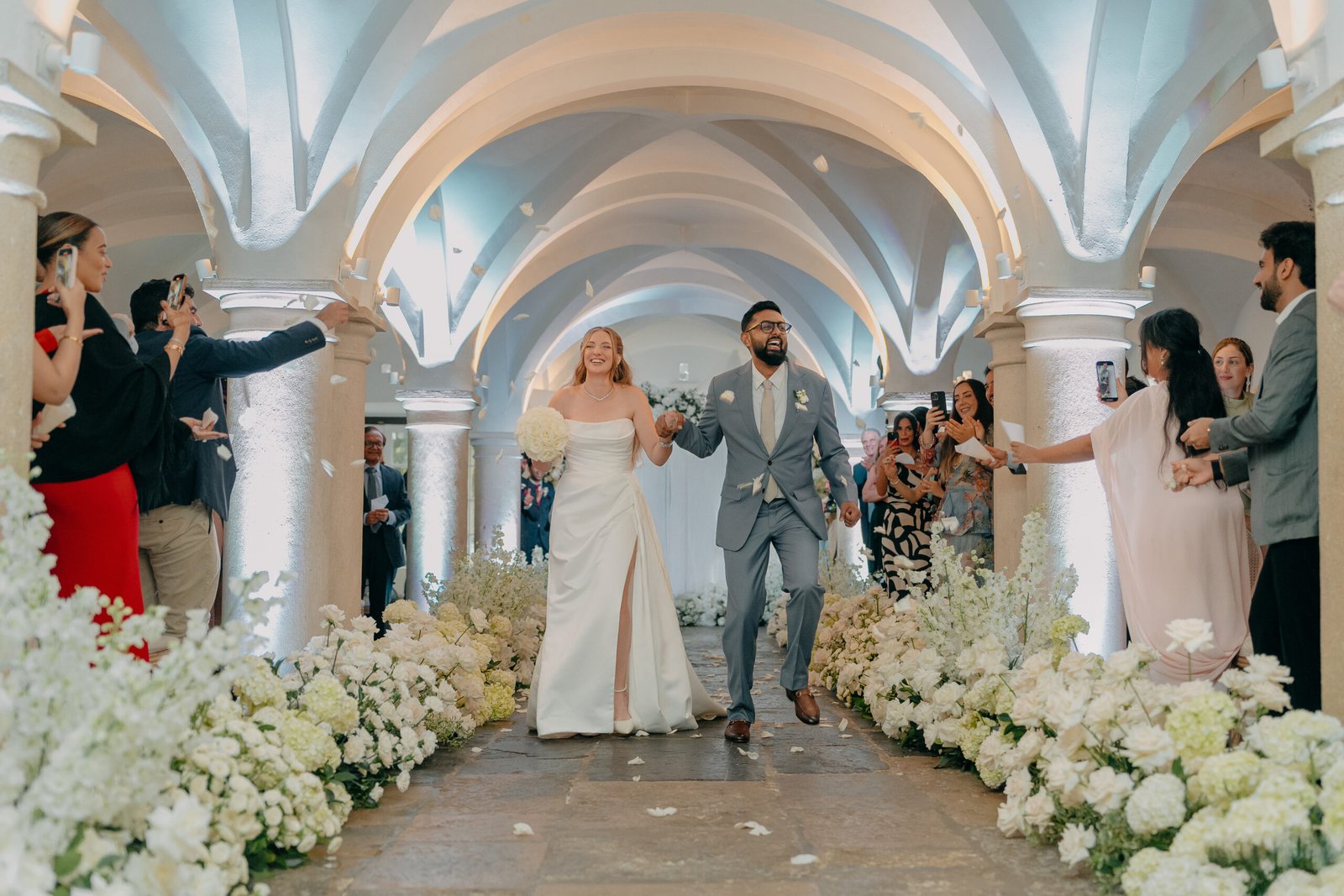
One of the most common questions multicultural couples ask is whether their wedding will feel like a compromise, a bit of one culture here, a bit of another there, neither quite whole. Megan and Karan’s three-day celebration across Sintra, Lisbon, and Estoril is the answer to that question.
Vivaah Weddings structured the entire journey around a single principle: equal cultural standing. Not alternating. Not blended into something unrecognisable. Equal. The sacred pheras took place in the Nuncio Garden mandap, where Megan and Karan circled fire seven times, each circuit a vow, each vow a different dimension of a shared life: duty, prosperity, love, respect, companionship, and lifelong unity. The baraat procession moved through the venue alive with music and family. The Sangeet filled SUD Lisboa Hall.
European tradition arrived through a white floral chapel ceremony, a live string quartet, and a painter working quietly among the guests, capturing moments as they happened. Portugal itself was honoured through azulejo-inspired décor, stilt walkers, traditional music, and the welcome chestnut ritual, a small, local gesture extended to every guest arriving at Penha Longa Resort and Casino Estoril.
No culture played a supporting role. Each had its own moment, its own visual language, its own emotional weight. This is what it looks like when nothing is left out.
“Three cities, three cultures, and not one moment where a guest could mistake which traditions belonged to whom. Equal standing is rare. This is what it looks like.”
— CELEX Ensemble
Wedding Planning
Indian Sacred Fire Meets English Florals
Timmy Kader
1SW Events
Southlodge, United Kingdom
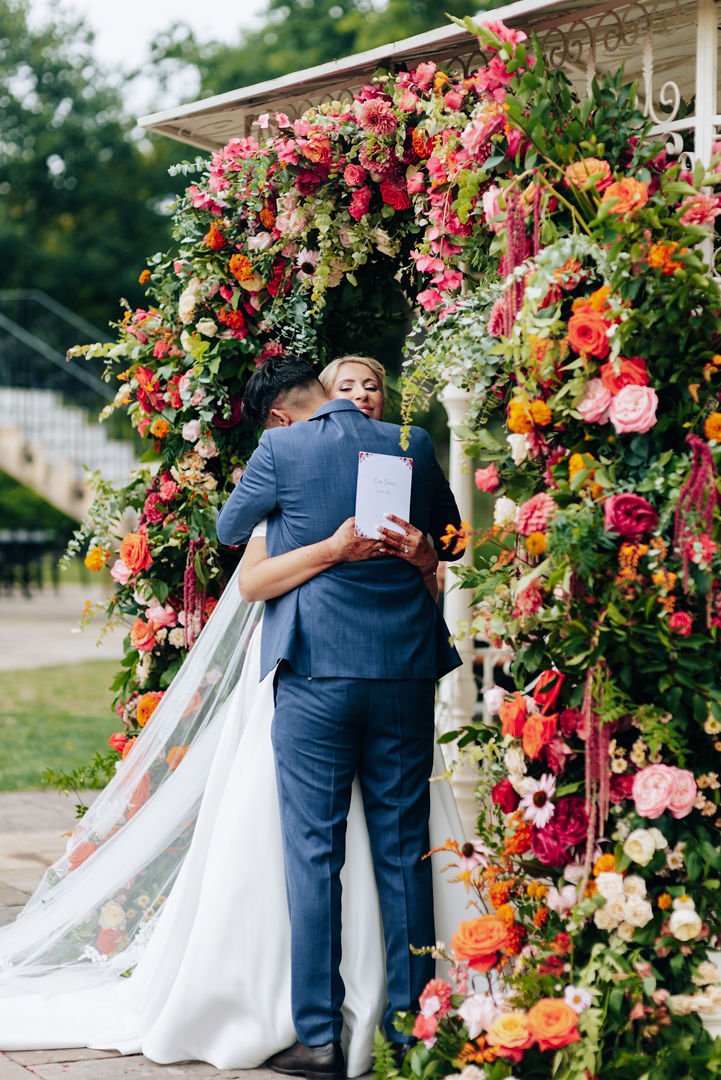
For couples navigating an Indian and British inheritance, the question is often one of register: how do you hold a ceremony that is ancient and precise alongside one that is relaxed and pastoral, without one flattening the other?
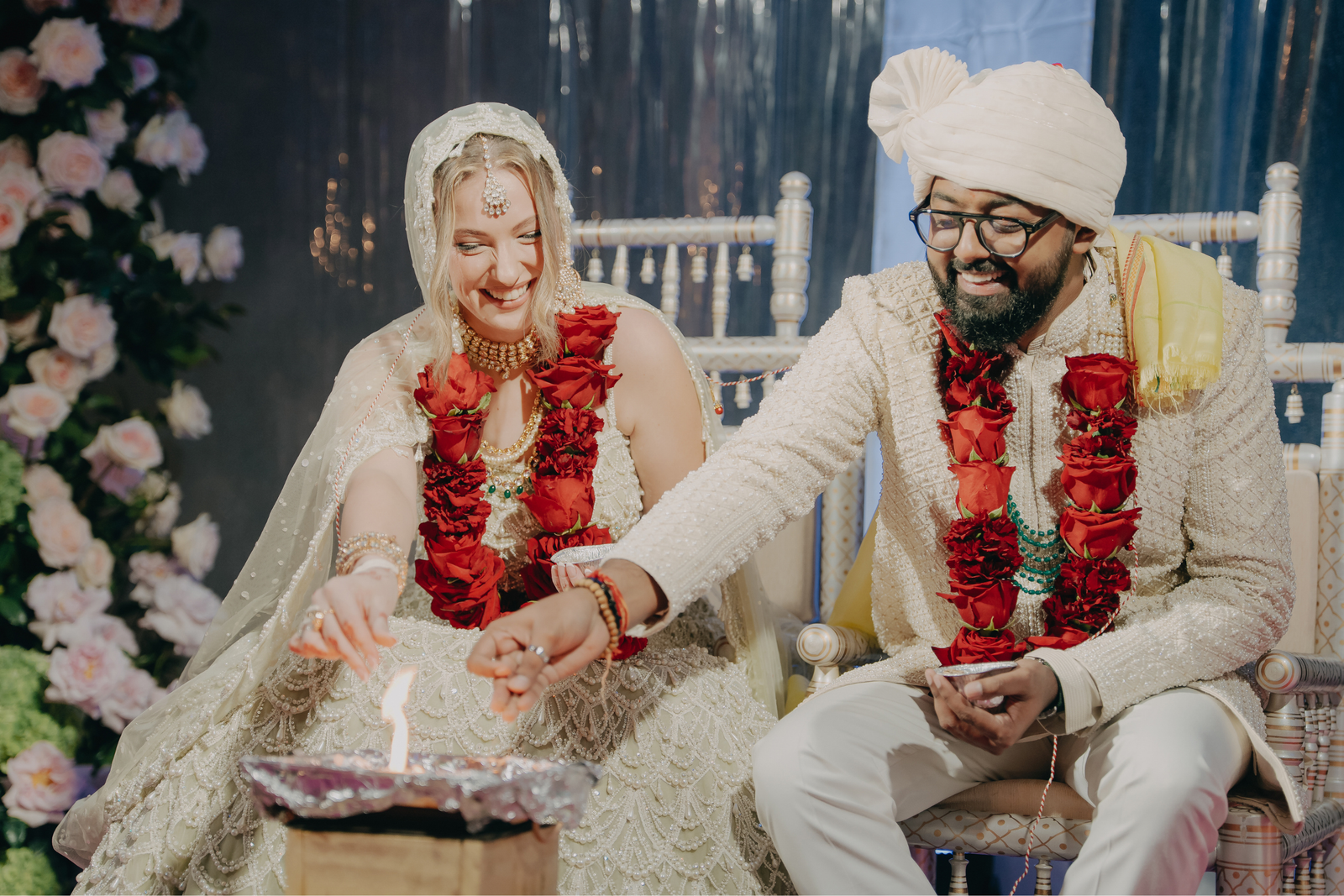
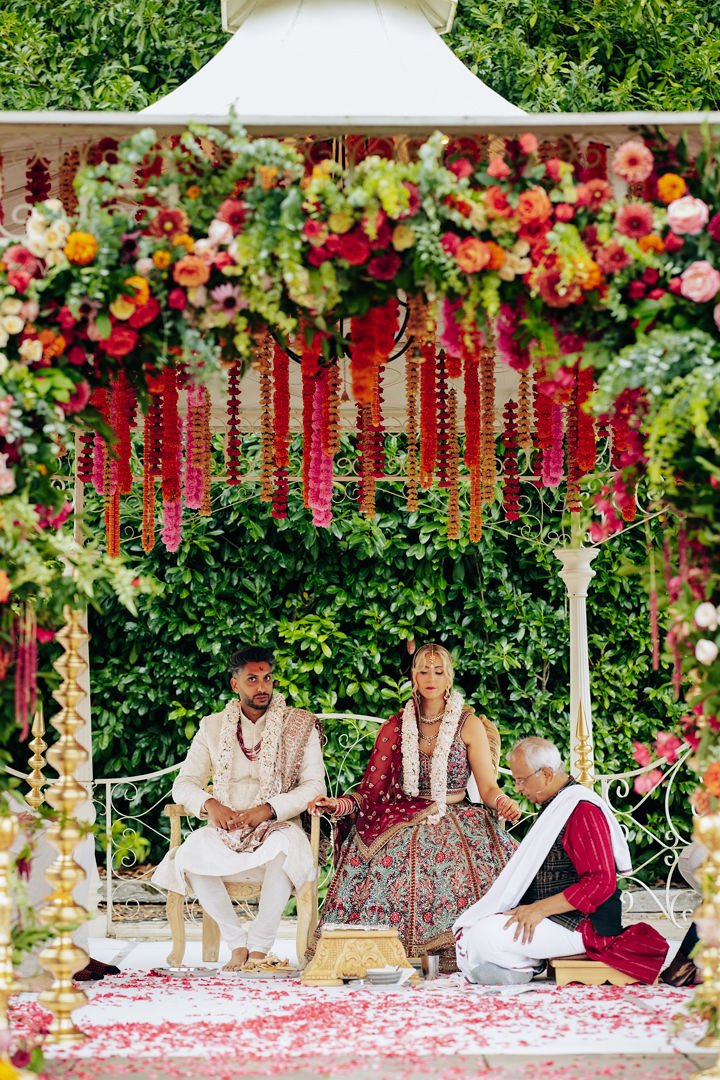
At Southlodge, Timmy answered it through the ceremony itself. The centrepiece was the Mandap and the saptapadi — the Hindu marriage contract built around seven pheras, seven promises, each circuit of sacred fire a vow spoken aloud and witnessed. These are not symbolic gestures in the loosest sense. They are a complete articulation of a life together, with language for duty, for nourishment, for prosperity, for respect. A structure that has held marriages for centuries.
Around that ceremony, Timmy layered Indian prints and patterns alongside English florals. The two visual languages sat together without either dominating. The result was a space that felt neither apologetically traditional nor superficially modern — just deeply, quietly theirs.
— CELEX Ensemble
Wedding Planning
One Flame, Thirteen Coins, One Promise.
Cybelle Maalouf
Kiveli Weddings
Sevilla, Spain
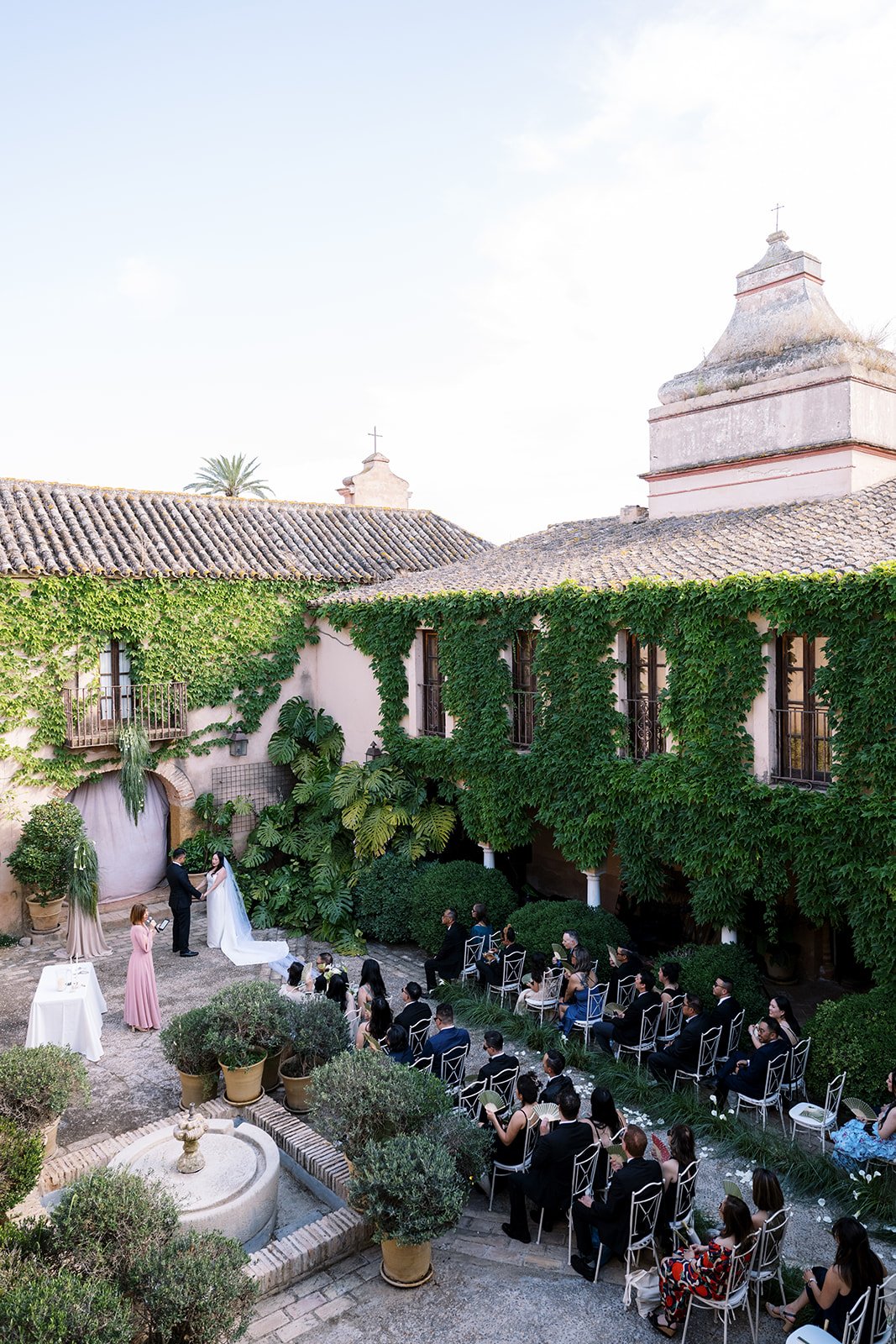
What happens when a wedding carries three ceremonial traditions, none of which belong to the country it’s being held in? Angelie and Socheat’s celebration at Hacienda Los Molinillos in Seville is one of the most generous answers to that question we’ve encountered.
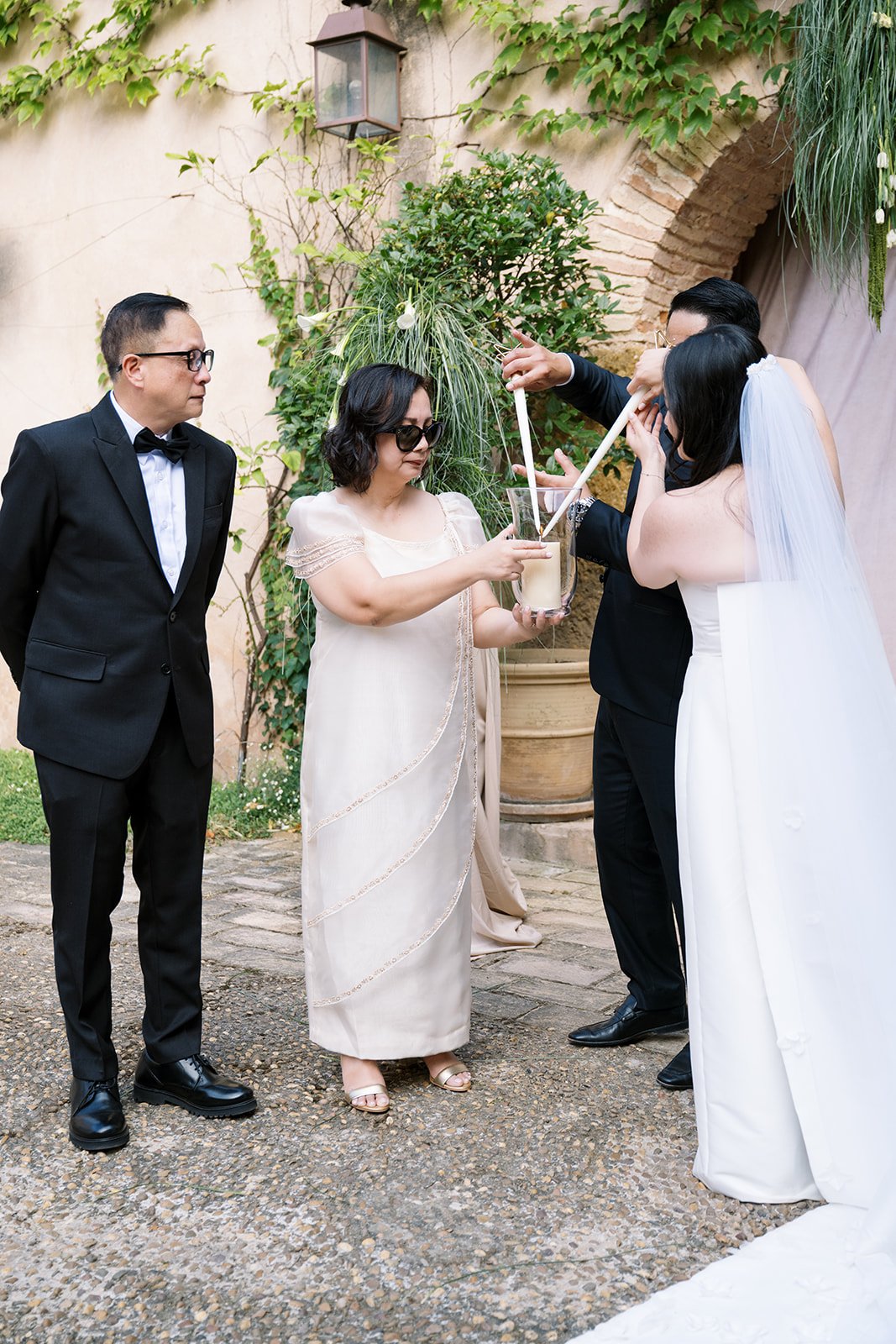
Three rituals held the ceremony. The Cambodian Gaat Sah, a cutting of hair performed by close family, is a ritual of release: the past released, the future blessed, the transition made physical. Alongside it, the Filipino Catholic Unity Candle, where each family lights a taper separately before the couple draws both flames into one. Then the Arras: thirteen coins exchanged between bride and groom, a promise of shared prosperity observed in both Filipino and Spanish Catholic tradition. What’s mine is yours. What’s yours is mine.
Cybelle Maalouf of Kiveli Weddings honoured the Sevillian setting through a performance of traditional sevillanas — four dancers, two vocalists, two guitarists. When the groom, a B-boy, and his friends moved onto the floor and fused breakdancing with flamenco rhythms, it became one of those moments a wedding holds for years afterward. Four oversized cream parasols, a traditional Filipino shade element, were repositioned against the Andalusian sun. Tables were dressed in bamboo chairs and patterned green and cream cloth, with glass holders stamped Ans-olé, the couple’s chosen mark.
Socheat designed the temporary tattoos himself: fan motifs present across both Filipino and Cambodian visual culture, alongside the sampaguita jasmine, national flower of the Philippines, and a bloom used in Buddhist ceremony. Guests queued throughout cocktail hour. Heritage made tactile. Something carried home on the skin.
“The bride’s cape carried floral appliqués that echoed the sampaguita, the national flower of the Philippines, without ever needing to say so.”
— CELEX Ensemble
Wedding Planning
When the Clothes Carry the Heritage
Renzioni Lawrence
Renzioni
Kampala, Uganda & Lagos, Nigeria
For couples who have spent their whole lives holding more than one identity, the wedding question isn’t really about logistics. It’s about recognition. Will this celebration reflect who we actually are?
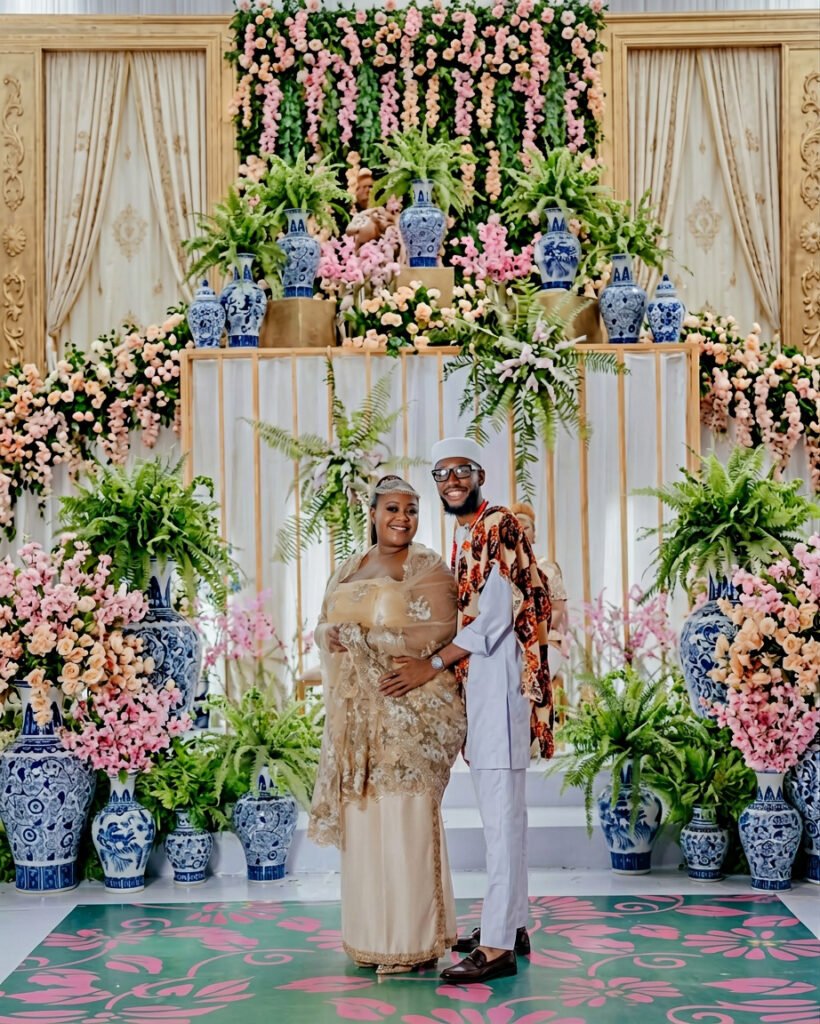
Zubby and Kemitare arrived with a family already shaped by multiple inheritances: the bride’s father Ugandan, her mother Nigerian, the groom Nigerian, all rooted in British life. Renzioni Lawrence’s answer was to stop separating the cultures and let them do what this couple’s family had always done; exist in the same room, at the same time, without competition.
The clothes carried both histories at once. Not an outfit change between traditions. Not a programme that toggled between cultures. A blended visual and ceremonial language that said: this is what a family looks like when it holds more than one story. For the couples who recognise that feeling, seeing it reflected back with this kind of grace is quietly profound.
— CELEX Ensemble
Wedding Planning
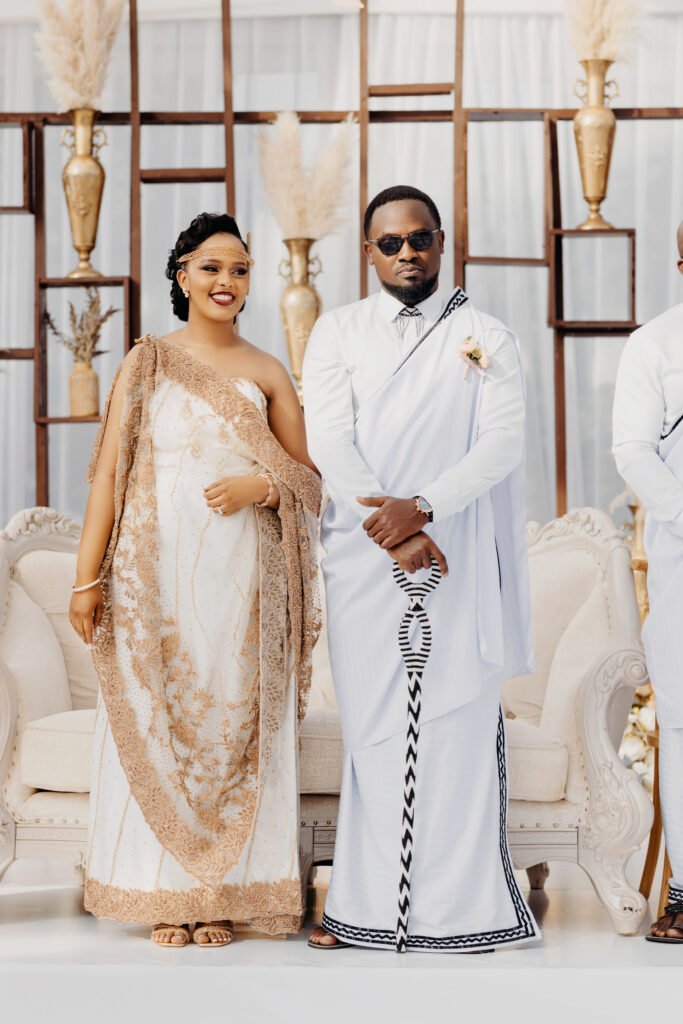
Rwandese Dresses on Ugandan Ground
Renzioni Lawrence
Renzioni
Akaama Resort, Uganda
East Africa holds a richness of distinct cultural traditions that often go unrepresented in wedding coverage, and an equally rich tradition of those cultures meeting, marrying, and making something new together.
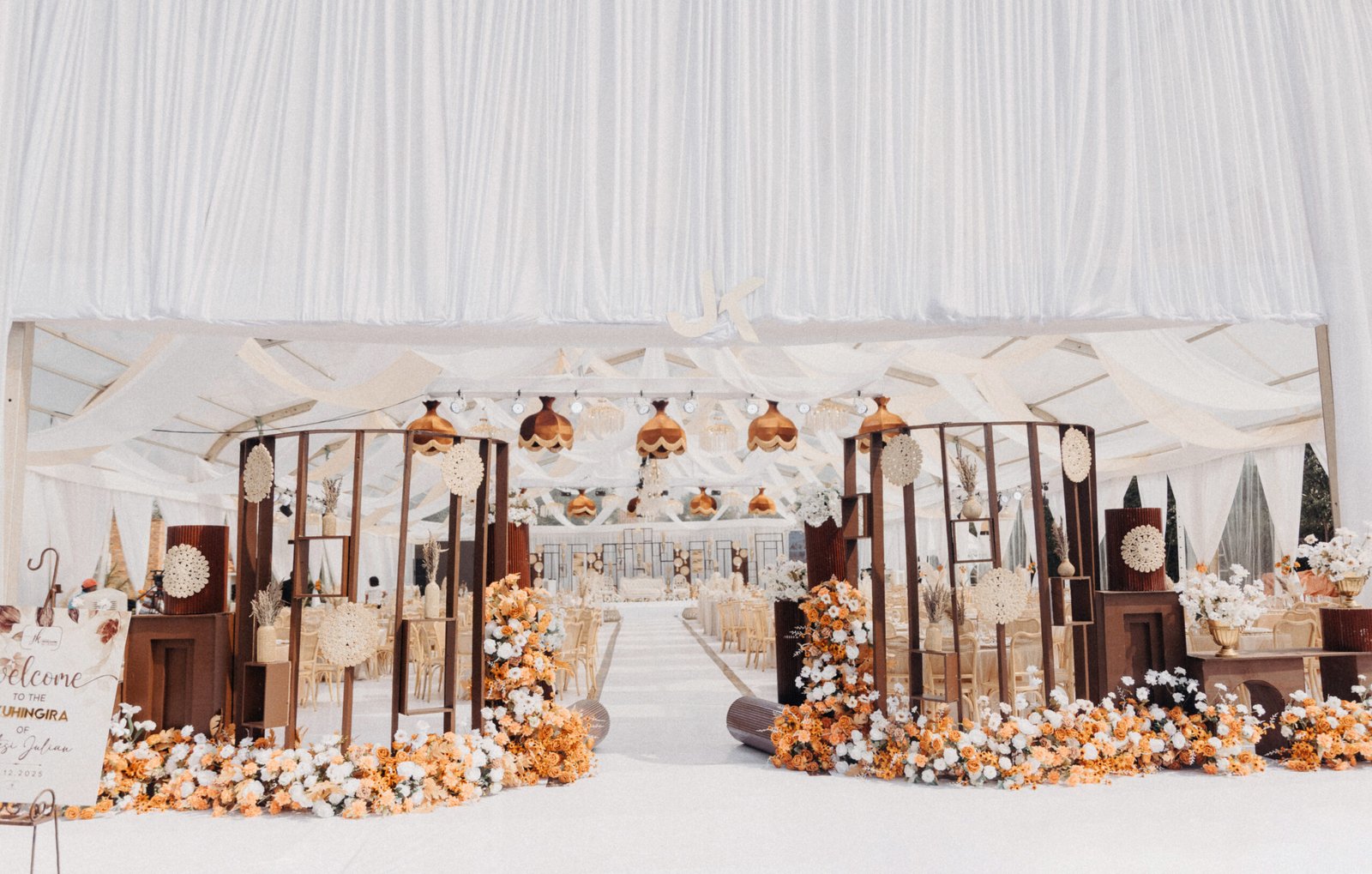
At Akaama Resort, Reagan and Julian brought Rwandese and Baganda heritage into conversation on Ugandan soil. The ceremonial centrepiece was the Rwandan dancers, their movement, their dress, their presence in the room a living expression of identity. Not a performance inserted into a schedule. An inheritance given its full dignity.
Lawrence grounded the visual design in terracotta hues and traditional weavings with genuine regional resonance, materials that mean something where they come from. Reagan and Julian trusted Lawrence with both events. That kind of trust, given and honoured, produces something a couple carries long after the day itself.
— CELEX Ensemble
Wedding Planning
Persian Sofreh in a Limestone City
Ines Nanic
Dubrovnik Event
Croatia
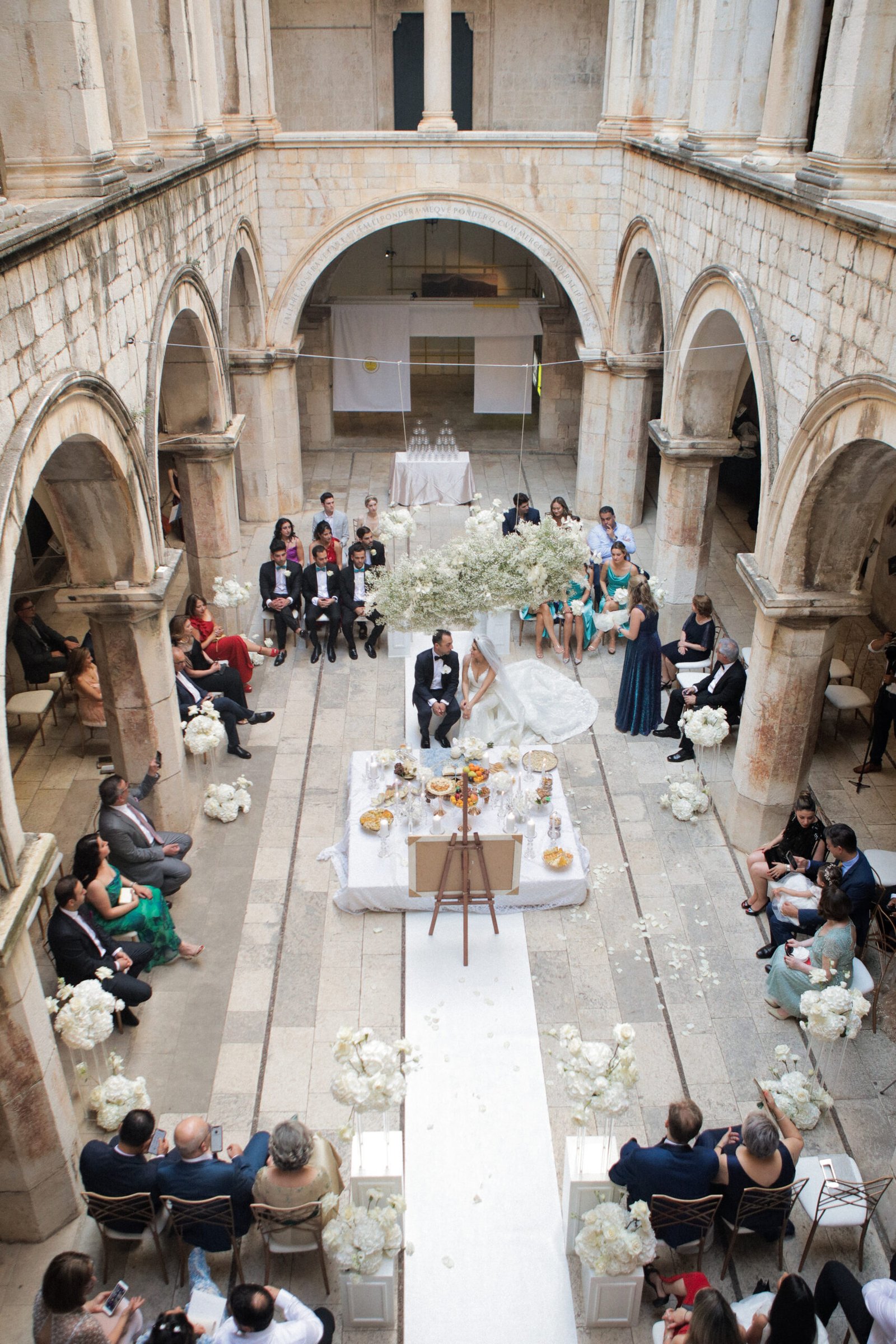
Persian weddings contain one of the most layered and visually extraordinary ceremonial traditions in the world, and one that many guests outside that culture will encounter for the first time at a multicultural wedding. Which raises a quiet but important question: how do you honour a tradition in full, in a foreign setting, without it becoming an exhibit?
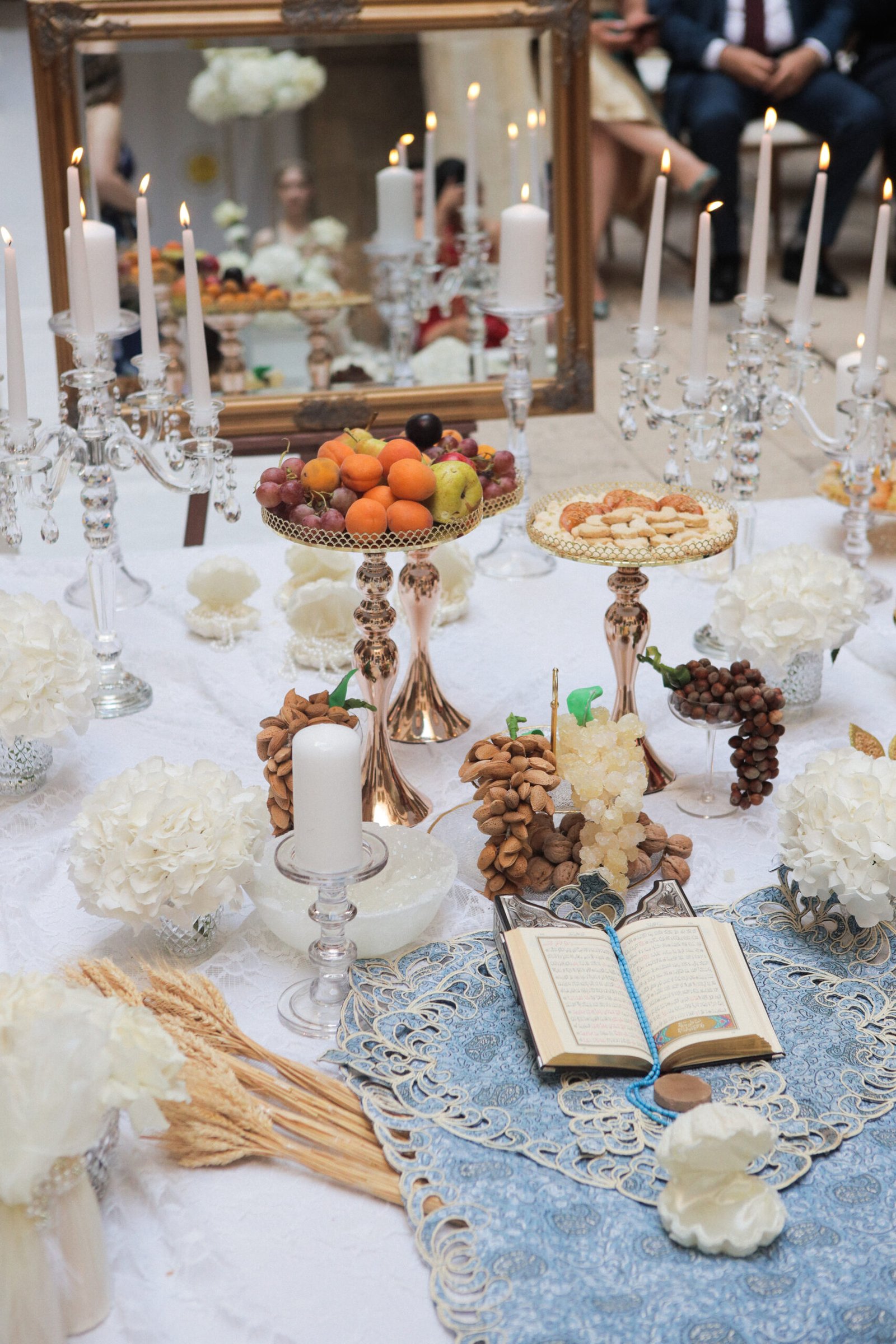
Sadaf and Kiavash were married at Sponza Palace in Dubrovnik’s old city, with the reception at Villa Rose. At the heart of the ceremony was the Sofreh Aghd, the traditional Persian wedding spread, where each object is placed with deliberate intention. Mirrors and candles for light and clarity. Honey for the sweetness of what is beginning. Each element a symbol carried forward through generations, each one with a reason.
Dubrovnik Event did not adapt the Sofreh to suit the European setting. They gave it the room and let it lead. Guests who had never encountered Persian ceremony found themselves drawn into its meaning without narration, without explanation. They simply felt it. That is what the best multicultural wedding planning achieves, not a lesson, but an experience.
“Rather than adapting tradition to fit the location, they gave it space. The Sofreh Aghd became the ceremony’s emotional centre.”
— CELEX Ensemble
Every celebration here made the same essential decision: not to choose between inheritances, but to insist on all of them. The mandap in the English garden. The jasmine on the cape. The Sofreh Aghd in the Adriatic light. The Rwandan dancers on Ugandan soil. The coins passed between two pairs of hands.
Heritage doesn’t ask to be simplified. It asks for professionals who know how to give it room, and couples who refuse to accept anything less.
Your Cultures Deserve a Planner Who Sees Them Both
The professionals in the CELEX Ensemble collective specialise in exactly this work; multicultural weddings, cross-cultural planning, heritage-led celebration design. If you’re looking to connect with one, allow us to find the right specialist for your wedding.
Credits
- Planner: JC Bespoke Events
- Photography: Bianca Sardi
- Videography: Rice & Roses
- Styling & Design: JC Bespoke Events
- Florals: Aurea Floral Studio
- Production: Ibiza ProDJ
- Catering: Crisp Catering
- Wedding Cake: Katie’s Kitchen
- Music & Entertainment: DJ Tom Grimes / David Devanagari / The Dhol Show / Your Dream Band / Rayco Santos / Grabo Bakos
- Hair: Mickey Jadav
- Make Up: Jo Jamface
- Dresses: Seema Gujral / Aisha Rao / Into Gaia / AKNVAS / Annie’s Ibiza / Amitya
- Stationery: The Bombay Lettering Company